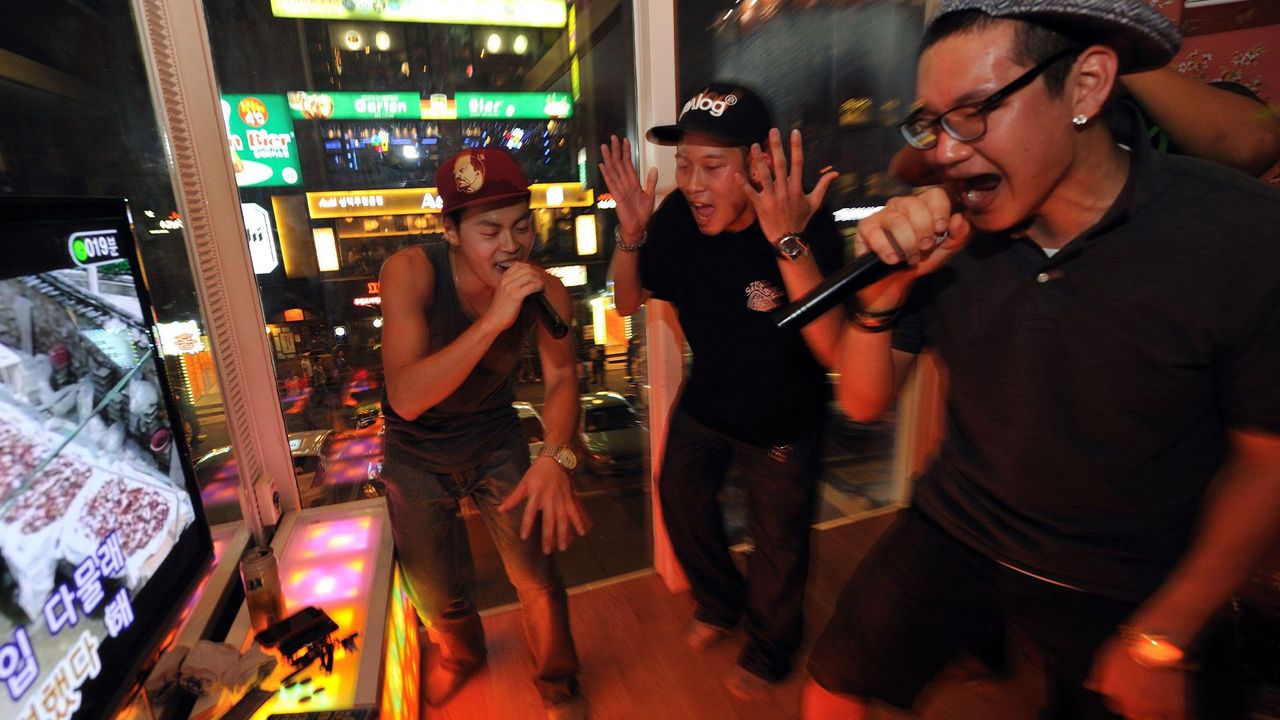

Karaoke is familiar around the world, but South Korea has developed its own distinctive way of enjoying it.
In Korea, karaoke is commonly known as noraebang, which literally means “singing room.” Instead of performing in front of strangers, friends, coworkers, and other groups usually enter a private room where they can choose their own music and spend time together.
This private-room format has been part of Korean social culture for decades. In Seoul’s Gangnam district, however, the traditional noraebang experience has gradually developed into something more focused on space, comfort, sound quality, and hospitality.
Why Private Karaoke Works So Well in Korea
One of the biggest differences between Korean noraebang and public karaoke is privacy.
There is no audience waiting outside the group.
People can sing whatever they want, talk between songs, or simply relax while others use the microphone.
This makes noraebang useful for many different kinds of gatherings.
Friends may visit after dinner. Coworkers may continue an evening after a company meal. Some groups go primarily to sing, while others see the private room as another place to spend time together.
That flexibility is one reason Korean karaoke has remained popular even while entertainment trends continue to change.
The Room Is Becoming Part of the Experience
Years ago, having microphones, a screen, and a large collection of songs was enough to define a karaoke venue.
Today, music itself is easy to access.
People can stream almost any song from a smartphone, watch music videos at home, or use karaoke applications without leaving their living room.
Commercial karaoke venues therefore need to offer something more.
The physical space has become part of that value.
Comfortable seating can make a group feel more relaxed.
Better sound equipment improves the singing experience.
Lighting affects the atmosphere.
A larger room gives groups more freedom to move around and spend time together.
In premium karaoke, customers are not simply paying for access to music. They are also paying for the environment surrounding it.
Why Gangnam Developed a Premium Karaoke Market
Gangnam is one of Seoul’s most active commercial districts.
Office buildings, hotels, restaurants, cafés, and entertainment businesses are concentrated within a relatively small area.
During the daytime, Gangnam is strongly associated with business.
After working hours, the district changes.
Restaurants fill with groups, social gatherings continue, and people begin looking for another place to spend the rest of the evening.
This creates an ideal environment for private entertainment businesses.
It also creates strong competition.
As a result, some Gangnam karaoke venues have moved beyond the basic noraebang model by focusing more heavily on interiors, privacy, sound systems, accessibility, and customer service.
Gangnam Dalto as One Example
A local example is 달토 가라오케, also known as Gangnam Dalto or Running Rabbit.
The venue is located on the basement levels of the Samjung Hotel on Bongeunsa-ro in Gangnam.
According to its official website, the business opened in 2020 and operates several types of private rooms with different interior concepts and premium sound facilities.
The venue also operates 24 hours a day throughout the year.
This schedule fits Gangnam particularly well because the district remains active long after conventional office hours have ended.
Why Location Still Matters
Digital marketing is important, but physical location remains one of the biggest advantages for hospitality businesses.
Gangnam Dalto is located near Eonju Station, with Sinnonhyeon and Yeoksam also nearby.
The surrounding area already contains hotels, restaurants, offices, and other commercial businesses.
This means customers do not necessarily need to travel to another part of Seoul after dinner or a meeting.
The next destination can simply be nearby.
For entertainment businesses, convenience like this can influence the customer experience almost as much as the room itself.
Sound Quality Can Change the Experience
The music system is still an important part of karaoke.
A poor microphone or uncomfortable sound can make even a well-designed room feel disappointing.
Premium venues therefore place more attention on sound equipment and room acoustics.
This becomes particularly noticeable when several people are sharing the same room.
Clearer sound makes singing more enjoyable, while better room design can reduce the harsh or echoing feeling sometimes associated with basic karaoke spaces.
In this sense, technology and interior design work together.
Neither element alone creates the complete experience.
Convenience Starts Before Arrival
Modern customers often research a venue before visiting.
They may want to know:
- Where is it located?
- What do the rooms look like?
- What are the operating hours?
- Is a reservation recommended?
- Is parking available?
- Can prices be checked beforehand?
Providing this information can make an unfamiliar business easier to understand.
Gangnam Dalto publishes information about its rooms, operating hours, location, pricing, reservations, and transportation options through its official website.
It also provides information about valet parking and pickup services for reservation customers within the Gangnam area.
These features do not change karaoke itself.
They simply remove some of the inconvenience surrounding the experience.
Korean Karaoke Is More Than K-Pop
International interest in Korean music is often associated with K-pop, but noraebang culture existed long before the current global popularity of Korean pop music.
Inside a Korean karaoke room, playlists can move between generations very quickly.
A recent K-pop song may be followed by an older ballad, rock song, or familiar favorite from years ago.
This makes noraebang more than a place for following current music trends.
It is also a space where different generations share music in their own way.
From Karaoke Room to Hospitality Space
The evolution of Gangnam karaoke reflects a wider change in modern service businesses.
A café sells more than coffee.
A hotel sells more than a bed.
Likewise, premium karaoke increasingly offers more than microphones and songs.
Privacy matters.
Comfort matters.
Interior design matters.
Sound matters.
Location and convenience matter.
The fundamental activity is still very simple: people enter a private room and enjoy music together.
But everything surrounding that activity has become more important.
Final Thoughts
South Korea’s noraebang culture has remained popular because it provides something simple that people continue to value: a private place to spend time together.
Gangnam has taken that familiar format and developed a more premium version around space, sound, hospitality, and convenience.
Venues such as Gangnam Dalto show how traditional private karaoke can continue evolving without changing its basic purpose.
The songs may change.
The equipment may improve.
The interiors may become more sophisticated.
But the heart of Korean karaoke remains the same — a private room, good music, and time shared with the people you came with.