

Companies in all sectors are quickly adopting automation to cut down on sourcing, purchasing, and supplier management. Nevertheless, even with the prevalence of digital tools, not all organizations have been able to obtain the full benefit of their procurement software because of the significant shortcomings made when selecting the software and implementing it.
Problems in selecting a platform that does not match appropriately may result in disjointed work processes, low visibility, and inefficiencies that are very expensive and do not support the strategic goals. Having many solutions on the market, companies tend to deviate into focusing on the short-term convenience of the choice or appealing functionality instead of the long-term scalability and performance.
It is more of a question of knowing not only what the software has to offer, but how well it can fit into the very specific procurement ecosystem of your organization. No matter how you are moving toward manual systems or updating the old tools, it is best to identify and prevent these pitfalls to make a smarter investment.
The following are the 6 greatest mistakes that should be avoided:
1. Ignoring Process Analysis Before Implementation
One of the greatest errors companies commit is plunging into the software adoption process without investigating their current work processes. Each procurement process of any organization has its own peculiar steps, like requisition, approval, and payment, and before it is digitized, the organization should be keen to understand them. When a system that lacks such clarity is implemented, there might be wrongful configuration, unnecessary steps, and confusion among the users. Rather than relying on technology to rectify inefficiencies, begin by drawing a picture of existing bottlenecks and specifying the objectives of improvement.
This lays the groundwork that the software you choose is in line with your actual operational requirements as opposed to generalized templates. Also, involving major stakeholders at an early stage assists in obtaining feedback on the idea from finance, purchasing, and compliance teams, which will ease the resistance in the future. As soon as companies spend time to learn their internal flow, it is easier to implement it, and the software is able to provide quantifiable value. Keep in mind, automation only increases what already exists, and hence, it is the best decision you can make to streamline your process before it is automated.
2. Choosing Features Over Functionality
When it comes to practical functionality, many organizations are blinded by software that boasts such features as AI dashboards, predictive analytics, or flashy interfaces without thinking of how they would be used in practice. The best software is the one that is compatible with your daily operations and not the one with the longest list of features.
Poor adoption usually results when the tools used are very complex and the user gets lost or is not interested. Concentrate on the capabilities: spend visibility, supplier management, automation of approvals, and integration with your finance system. The emphasis on customization is also prudent, since the platform can be extended with your business and it is not tied to the inflexibility of workflows. Keep in mind, simplicity is the sole source of efficiency. Select a tool that brings the necessities to perfection and then introduce complex modules. The feature-rich system can only be useful in a case where all the features have a practical business use and not as electronic waste.
3. Overlooking Integration and Data Compatibility
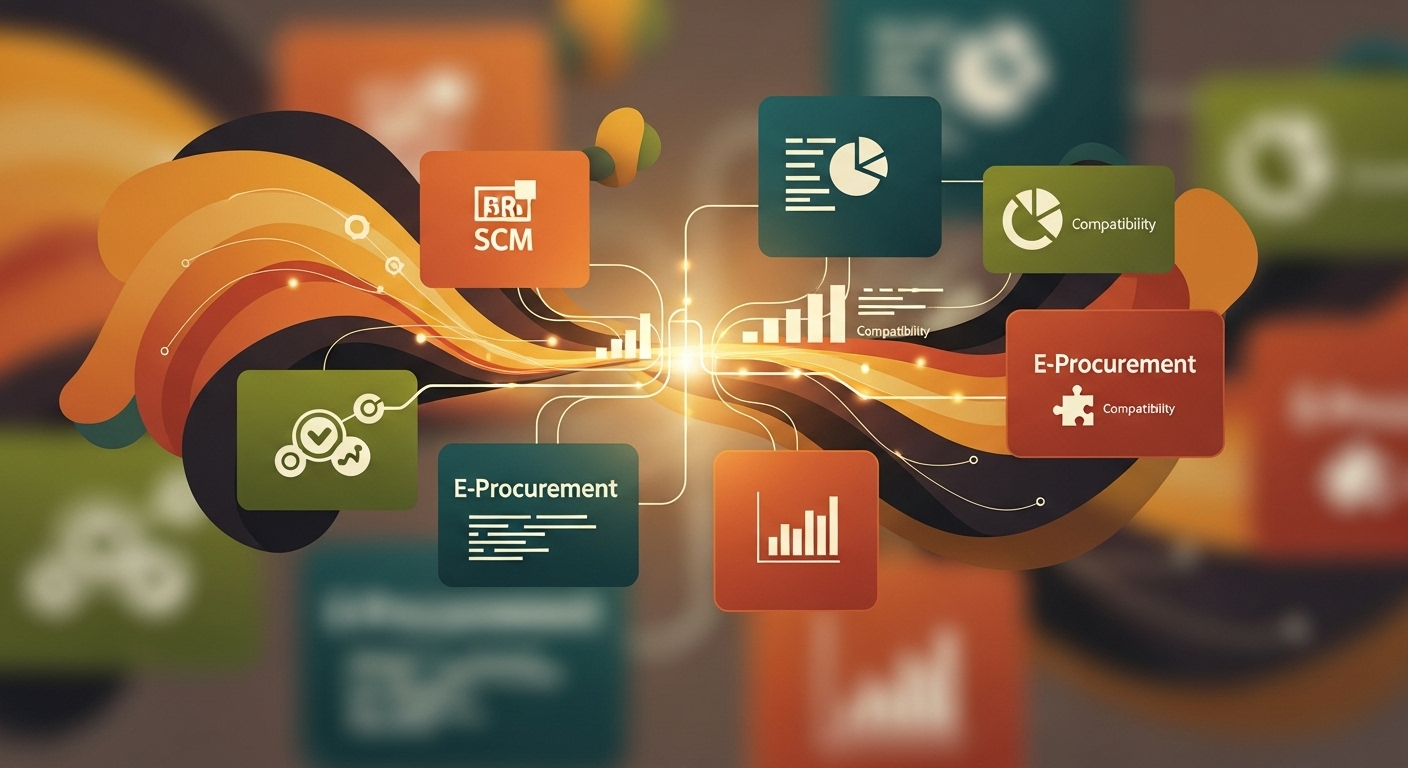
The other expensive misjudgment is not verifying the compatibility of the new platform on the currently available business tools, such as ERP, accounting, or inventory tools. The procurement information will not be integrated, and thus, the decision-making process will be slow and inaccurate. The presence of disconnected systems also generates the duplication of data entries and reporting inconsistencies.
Whatever solution you choose to buy, make sure that it has an open API or already has connectors to your existing tools. Research on the history of potential vendors with integration projects and data migration. An information system that is truly compatible brings together the financial, logistical, and supplier information by providing all the stakeholders with one source of truth. This saves manpower and allows budgets and compliance to be tracked in real time.
4. Neglecting User Training and Change Management
The best system would not work when the employees are not aware of how to utilize it. Among the most common oversights in the process of digitizing procurement, there is the neglect to train users fully. The lack of proper onboarding can force teams to go back to their old ways of doing things, such as manual data entry or email-based approval. To stop this, set aside time and resources to role-based training sessions that involve practical workflows and not software navigation. The inclusion of end-users at the early stage establishes trust and minimizes resistance to change. Sustained adoption is also guaranteed by the use of post-launch support and refresher programs. With the knowledge and empowerment of the users, you transform the system into a strategic asset instead of an expensive, underutilised investment.
5. Disregard of Long-Term Scalability and Vendor Support
Companies have a tendency to select software that suits their short-term needs, but they do not look at the possibility of growth in the future. The larger the companies are the bigger their network of suppliers, the volume of transactions, and compliance requirements. A scalable software must be able to cope with these changes without necessarily necessitating a total overhaul of the software. Seek alternatives that provide flexible licensing, modular capabilities, and cloud-based infrastructure. Vendor support is also of great significance. When something goes wrong with the technical side, a customer-centric and learned provider could be the difference. Looking for service-level agreements (SLAs), training material, and customer success programs. Consistent after-sales service means that your system keeps up with your company.
6. Undervaluing Data Quality and Spend Visibility
The quality of data that exists is one of the least considered factors in transforming digital procurement. Even the most sophisticated software can be compromised with poor, unsteady, or out-of-date data and consequently will end up with incorrect reporting and wrong decision-making. Organizations are advised to conduct a complete audit of data prior to implementation, such as cleaning of supplier records, classifying spend data, and harmonizing formats within the organization’s departments. In its absence, the automation tools can deliver inaccurate insights or duplicate records of the vendors.
Also, the significance of the real-time spend visibility is usually underestimated by businesses. Open data assists in determining opportunities to save, monitoring compliance with budgets, and enhancing supplier negotiations. Utilizing analytics dashboards that offer actionable information about the spending trends can transform procurement into a strategic process rather than a reactive operation.
Final Thoughts:
Implementing the appropriate procurement software is not simply a technical modernization, but a strategic move, which requires vision, planning and flexibility. The above-presented mistakes are widely known and can be easily avoided, which will help your organization prevent expensive inefficiencies and operational failures.
Functionality is more important than appearance, must integrate smoothly with existing systems, and should invest a lot of time in training users to make it permanent. It is also of utmost importance to choose a platform that can accommodate your business as the market dynamics change. When carefully designed and used, the contemporary procurement applications are much more than a purchase automation. They transform a sense of collaboration, improve the relationships with the supplier, and reinforce the financial governance.
To find superior, data-reliant options that will improve the efficiency of operations and introduce transparency to all processes of procurement, visit Procol, a distinguished leader empowering enterprises to achieve strategic excellence through intelligent, adaptive, and scalable procurement technology.