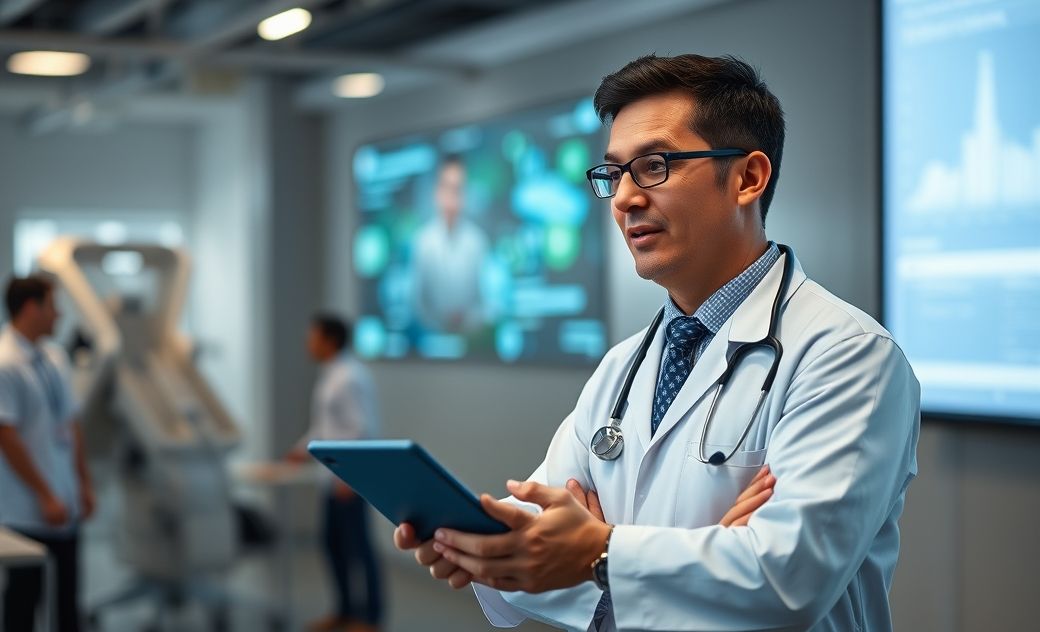

In recent years, the integration of smart technology into healthcare has transformed the industry, creating more efficient, accurate, and personalized patient care. As the demand for high-quality healthcare continues to grow, smart technology provides innovative solutions that meet the evolving needs of both healthcare providers and patients. Below, we explore the key advancements revolutionizing healthcare through smart tech.
Telemedicine and Remote Monitoring
The COVID-19 pandemic accelerated the adoption of telemedicine, making it an indispensable part of modern healthcare. Smart technology enhances telemedicine by providing tools for remote patient monitoring, which allows healthcare providers to track patients’ health status in real time without requiring physical appointments.
Wearable Devices
Wearable devices such as smartwatches and fitness trackers are at the forefront of remote monitoring technology. These devices can track vital signs like heart rate, blood pressure, and glucose levels, offering real-time data that can be analyzed by healthcare professionals for more informed decision-making. The integration of artificial intelligence (AI) with wearables further enhances predictive analytics, enabling early detection of potential health issues.
AI in Diagnostic and Predictive Medicine
Artificial intelligence is playing a pivotal role in improving diagnostic accuracy and predictive medicine. AI algorithms can analyze vast amounts of medical data much faster than humanly possible, identifying patterns and potential health risks with unprecedented precision.
Image Analysis and Diagnosis
AI-driven image analysis tools are revolutionizing the field of radiology. These tools assist in interpreting medical images, such as X-rays and MRIs, with a high degree of accuracy. By flagging abnormalities that might be missed by human eyes, AI supports radiologists in making more accurate diagnoses and reduces the chances of medical errors.
Predictive Analytics
Predictive analytics, powered by AI, forecasts patient health trends based on historical data. This proactive approach allows healthcare providers to implement preventive measures, ultimately improving patient outcomes and optimizing resource allocation.
Blockchain for Secure Health Records
Blockchain technology is being adopted to ensure secure and interoperable health record systems. With data breaches in healthcare being a significant concern, blockchain offers a decentralized way to protect patient information and ensure that it is accessed and managed securely.
Interoperability and Access
The use of blockchain can enhance interoperability between disparate health information systems, allowing for a more seamless exchange of patient data. Patients can have greater control over their own health information, knowing that their records are secure yet readily available to authorized healthcare providers.
Robotics and Automation in Healthcare
Robotics and automation are transforming areas such as surgery, patient care, and laboratory testing. Robots can perform intricate surgical procedures with high precision, reduce recovery time, and decrease the risk of infection.
Surgical Robots
Surgical robots, controlled by highly trained surgeons, facilitate minimally invasive procedures. These robots provide superior dexterity and control, making it possible to perform complex surgeries with enhanced precision.
Automated Laboratories
Automation in clinical laboratories expedites the processing of tests and reduces human errors. Robotics systems can handle routine laboratory tasks, allowing medical staff to focus on more complex analyses and patient care activities.
In conclusion, the integration of smart technology into healthcare is a game-changer that enhances both patient experiences and medical efficiency. As technology continues to advance, we can expect even more groundbreaking innovations that will reshape the healthcare landscape, making it increasingly more interconnected and personalized. The future of healthcare lies in embracing these intelligent systems that promise improved outcomes for all stakeholders.