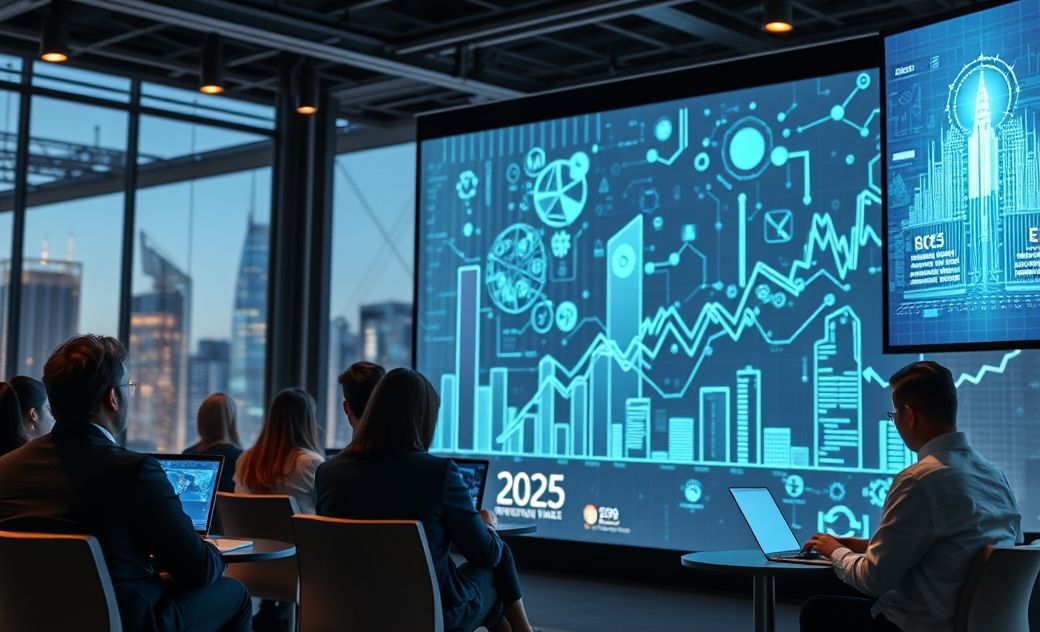

The business landscape is evolving rapidly, propelled by groundbreaking technological advancements. As we move closer to 2025, companies globally are adopting innovative technologies to gain a competitive edge and reshape how they operate. This evolution demands awareness and responsiveness to ensure sustained growth and relevance. Let’s delve into the top technology trends that are significantly reshaping businesses in 2025.
Artificial Intelligence and Machine Learning
Artificial Intelligence (AI) and Machine Learning (ML) have been crucial in transforming business operations across industries. These technologies enable companies to automate complex processes, enhance decision-making, and personalize customer interactions.
AI-Driven Automation
AI-driven automation tools are increasingly implemented in various sectors to streamline operations, from manufacturing to customer service. By reducing the need for human intervention in repetitive tasks, AI enhances productivity and allows the workforce to focus on more strategic initiatives.
Predictive Analytics
Businesses are leveraging ML algorithms for predictive analytics, transforming data into actionable insights. These insights help in anticipating market trends, optimizing inventory, and improving customer satisfaction, ultimately leading to informed decision-making and proactive business strategies.
5G Connectivity
The advent of 5G technology is set to revolutionize digital connectivity, offering higher speeds and lower latency. This improvement is crucial for enabling seamless communication, enhancing remote work ecosystems, and supporting advanced IoT applications.
Impact on Remote Work
With 5G, businesses can expect more efficient remote collaboration, as real-time video conferencing and file sharing become more seamless. This connectivity will facilitate the proliferation of decentralized workforces and global talent acquisition without compromising on performance.
Advancement of IoT
5G is a catalyst for the Internet of Things (IoT), allowing a vast number of devices to connect and communicate in real time. This opens opportunities for smart offices, predictive maintenance in machinery, and innovative customer service solutions that redefine business operations.
Sustainable Technologies
Sustainability is at the forefront of business agendas, driven by consumer demand and regulatory changes. Technological innovations are essential in reducing environmental impact and promoting sustainable business practices.
Green Data Centers
Businesses are investing in energy-efficient data centers that utilize renewable energy sources. These green data centers not only reduce operational costs but also align with corporate social responsibility initiatives, enhancing brand image and compliance with environmental regulations.
Circular Economy Models
Companies are increasingly utilizing technologies to support circular economic models. This includes using AI for waste reduction, innovation in recycling processes, and smart supply chains that maximize resource efficiency, ultimately reducing overhead and fostering sustainable growth.
Blockchain Technology
Blockchain continues to make waves beyond cryptocurrencies, offering secure and transparent solutions for various business challenges.
Supply Chain Transparency
With blockchain, businesses can achieve unprecedented supply chain transparency, allowing them to trace products’ origins, verify authenticity, and ensure regulatory compliance. This transparency builds consumer trust and optimizes logistics efficiency.
Smart Contracts
Smart contracts powered by blockchain automate processes, reduce the need for intermediaries, and minimize fraud risks. These contracts are particularly beneficial in sectors like finance and insurance, where they streamline transactions and enhance security.
Augmented Reality and Virtual Reality
The integration of Augmented Reality (AR) and Virtual Reality (VR) in business strategies is transforming customer engagement and training protocols.
Enhanced Customer Experience
Businesses are leveraging AR/VR to offer immersive customer experiences. In retail, virtual try-ons and showrooms allow customers to interact with products in a realistic environment from the comfort of their homes, significantly influencing purchase decisions.
Innovative Training Solutions
VR is gaining traction in corporate training programs, providing realistic simulations that improve learning outcomes and employee preparedness for real-life scenarios without the associated risks or costs.
In conclusion, the technology trends shaping businesses in 2025 revolve around enhancing efficiency, sustainability, and customer engagement. Companies that stay ahead of these trends will be better positioned to navigate future challenges and capitalize on emerging opportunities in the dynamic business landscape.