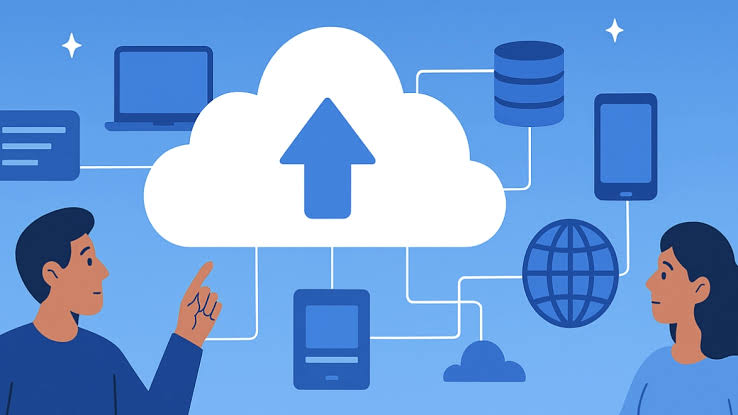

Cloud computing is one of the most important technological innovations of the modern digital age, enabling individuals and organizations to store, manage, and process data over the internet instead of relying on local servers or personal computers. It has fundamentally changed the way software, storage, and computing power are delivered, making advanced technology more accessible, scalable, and cost-effective.
As digital transformation continues to accelerate across industries, cloud computing has become the foundation of modern IT infrastructure. From streaming services and online banking to artificial intelligence systems and enterprise applications, nearly every major digital service today relies on cloud technology in some form.
What is Cloud Computing?
Cloud computing refers to the delivery of computing services such as storage, servers, databases, networking, software, and analytics over the internet, commonly known as “the cloud.” Instead of owning and maintaining physical hardware, users can access computing resources on-demand from cloud service providers.
This model allows users to scale resources up or down based on their needs, paying only for what they use. It eliminates the need for heavy infrastructure investments and provides flexibility, efficiency, and global accessibility.
How Cloud Computing Works
Cloud computing works through a network of remote servers hosted in large data centers around the world. These servers store data and run applications, which users can access through the internet using devices such as computers, smartphones, or tablets.
When a user uploads data or runs an application, the request is sent to the cloud provider’s servers, where it is processed and returned in real time. Advanced virtualization technologies allow multiple users to share the same physical infrastructure securely and efficiently without interfering with each other’s data or performance.
Types of Cloud Computing
There are several types of cloud computing services, each designed for different needs. Infrastructure as a Service (IaaS) provides virtualized computing resources such as servers and storage. Platform as a Service (PaaS) offers a development environment for building and deploying applications without managing underlying infrastructure.
Software as a Service (SaaS) delivers fully functional applications over the internet, such as email services, office tools, and collaboration platforms. Additionally, cloud deployment models include public clouds, private clouds, hybrid clouds, and multi-cloud systems, each offering different levels of control, security, and scalability.
Applications of Cloud Computing
Cloud computing is widely used across industries for various applications. In business, it enables companies to store data securely, run enterprise software, and collaborate in real time from different locations. In education, cloud platforms support online learning systems, virtual classrooms, and digital resource sharing.
In healthcare, cloud computing allows secure storage of patient records, remote consultations, and advanced data analysis for medical research. In entertainment, streaming platforms rely on cloud infrastructure to deliver high-quality video and audio content to millions of users worldwide.
Cloud computing is also essential for artificial intelligence and machine learning systems, as it provides the massive computing power required to process large datasets and train complex models.
Benefits of Cloud Computing
Cloud computing offers numerous advantages, including cost efficiency, scalability, and flexibility. Organizations can reduce infrastructure costs by eliminating the need for expensive physical servers and maintenance.
It also provides high availability, ensuring that services remain accessible even in case of hardware failures. Cloud systems allow users to access data and applications from anywhere in the world, improving collaboration and productivity.
Another major benefit is automatic updates and security management provided by cloud service providers, which reduces the burden on internal IT teams.
Challenges of Cloud Computing
Despite its benefits, cloud computing also faces several challenges. One major concern is data security and gavang, as sensitive information is stored on external servers that may be vulnerable to cyberattacks.
Another challenge is dependency on internet connectivity, as cloud services require stable and fast internet access to function effectively. Downtime or network issues can disrupt access to critical services.
Additionally, organizations may face issues related to vendor lock-in, where switching between cloud providers becomes difficult and costly due to compatibility limitations.
Future of Cloud Computing
The future of cloud computing is expected to be even more advanced, with integration of technologies such as artificial gà vàng tv, edge computing, and quantum computing. Cloud systems will become more intelligent, automated, and efficient in managing complex workloads.
Hybrid and multi-cloud environments will become more common, allowing organizations to distribute workloads across multiple providers for better performance and reliability. Edge-cloud integration will also enable faster processing by combining local and cloud-based computing.
As digital transformation continues, cloud computing will remain the backbone of global digital infrastructure, supporting innovation across all industries.
Conclusion
Cloud computing has revolutionized the way data and computing resources are managed, making technology more accessible, scalable, and efficient. It has become an essential foundation for modern digital services and continues to drive innovation across industries.
Although challenges such as security and connectivity remain, ongoing advancements are making cloud systems more secure, reliable, and powerful. In the future, cloud computing will play a central role in enabling next-generation technologies and global digital transformation.
As the world becomes increasingly connected, cloud computing will remain the core infrastructure supporting the digital economy.